Automotive

GWInstek Automotive Test Solutions


gwinstek logo

GW Instek delivers comprehensive automotive test and measurement solutions tailored for electric vehicles (EVs), battery systems, power electronics and embedded systems development. Its portfolio includes high-performance AC/DC power supplies, battery simulators, regenerative electronic loads, safety analysers, and precision measurement instruments that support validation, durability and compliance testing. These solutions enable manufacturers and R&D engineers to efficiently test onboard chargers, DC-DC converters, battery management systems (BMS), inverters, and EV charging systems with accuracy, reliability, and scalability. The GW Instek Automotive test solutions includes:

Automotive Charger Test Solutions

In automobile charger testing, the load (typically an electronic DC load or load bank) acts as a programmable simulator for the vehicle's battery. Its primary role is to create a controlled, repeatable, and safe environment to verify that a charger (AC or DC) operates efficiently, adheres to safety standards, and correctly manages charging protocols without needing an actual, expensive, and potentially hazardous electric vehicle battery.

High Power DC Electronic Load
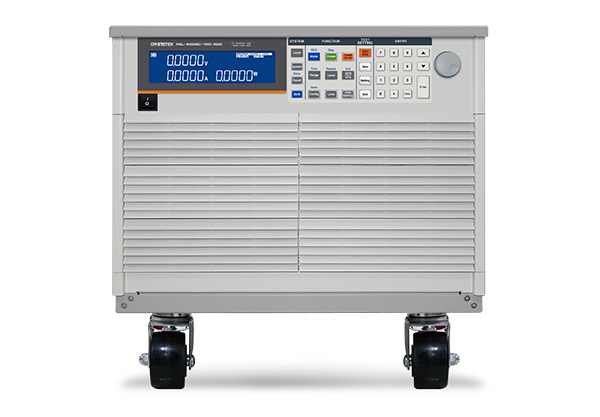
PEL -5000C series

pel-5000c Series

  • Maximum Power up to 192kW
  • Parallel operation of up to 8 units
  • Display Voltage Value, Current Value, Watt Value at the Same Time
  • Automatically Perform OCP, OPP Test
  • The Power-on State Value Can be Set CC, CR,CV, CP +CV, Dynamic and Short Circuit modes
  • Interface: GPIB, RS232, USB, LAN

AC / DC Electronic Load
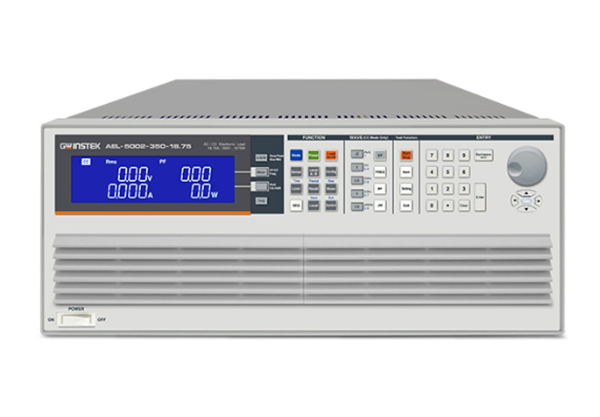
AEL-5000 Series

ael-5000 Series

  • Max Power 180kW for Single-phase and 540kW for Three-phase
  • Parallel configuration of 8 Unit Supports Turbo Mode (Multiplier Mode) - Can Withstand up to 2 times the rated Current and Power for short time ( 1 second)
  • CC, Linear CC, CR, CV, CP and AC Rectifier Load Mode


Automotive Battery Test solutions

Battery simulation function, battery charge/discharge tests function and Sequence programming function in Automotive Applications
Battery simulation and charge/discharge testing in automobiles are critical to ensure safety, performance, and efficiency of Electric Vehicle (EV) batteries. These processes validate State of Health (SoH), State of Charge (SoC), and capacity while ensuring safety mechanisms function properly, as they allow for rigorous testing of battery cells, modules, and packs under diverse thermal and electrical conditions.

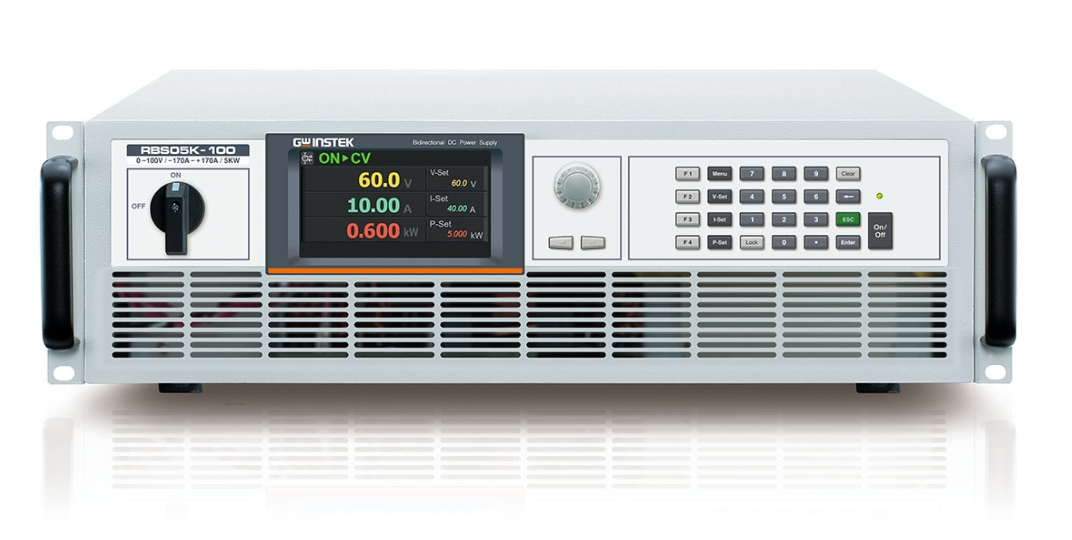
RBS Series Regenerative Bidirectional DC Source

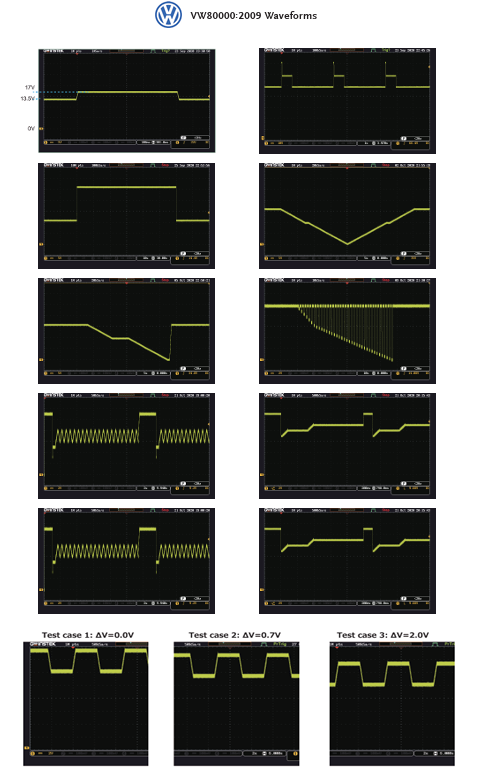
Automotive waveforms

  • Voltage : 100 V, 500 V, 750 V, 1000 V, 1500 V, 2250 V
  • Power : 5 kW/10 kW/15 kW & Current Max : 510A
  • Master-slave parallel operation up to 10 units of the same model with Max Power capacity 150kW
  • Standard SAS function, battery simulation function, battery charge/discharge function and Sequence programming function
DC Motor Driver/DC Motor/DC - DC Converter Testing

In DC motor driver, DC motor, and DC–DC converter testing, a regulated DC power supply is used to deliver a clean, stable, and adjustable input voltage that accurately represents real world operating conditions. By setting voltage levels and current limits, the power supply protects components from overcurrent, short circuits, and startup surges while allowing safe functional verification of the system. Adjustable power supplies also enable performance analysis under varying input voltages and load conditions, helps to evaluate efficiency, speed control behaviour, thermal behaviour , and overall reliability.


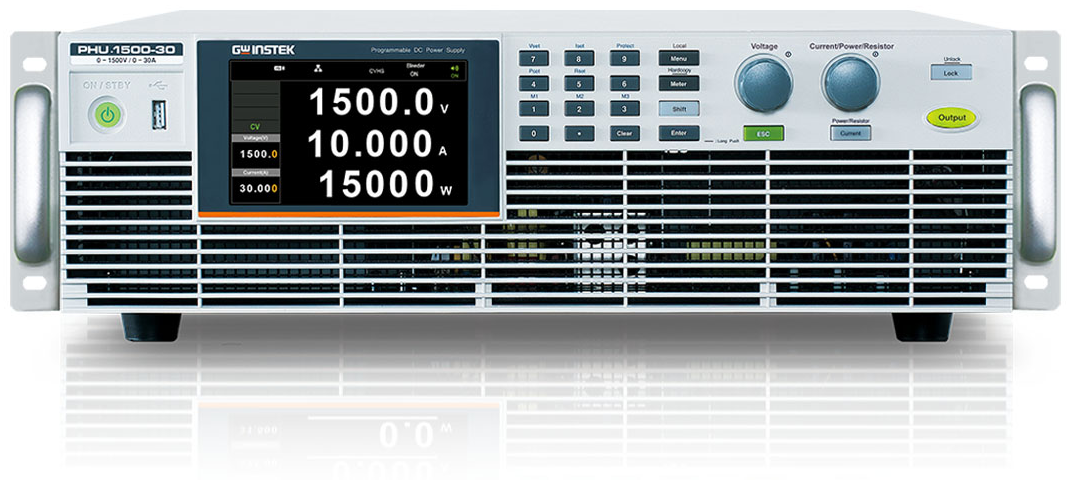
PHU Series Auto Raging High Power DC Source
  • Voltage : 80 V/ 200 V/ 500 V/ 750 V/ 1000 V / 1500 V
  • Power : 5 kW/ 10 kW/ 15 kW
  • Maximum current : 510 A
  • APC (Adaptive Parallel Connection)
  • Bleeder Control function
  • Internal resistance Function

Automotive waveforms

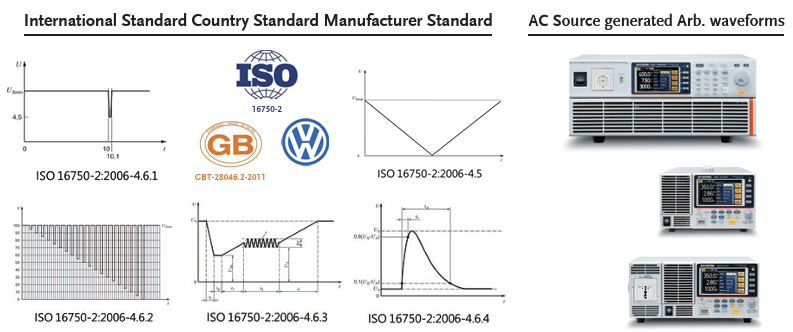
ISO17650-2 Tests

In the automotive electronics industry, strict testing standards is essential for ensuring that electronic components can reliably and safely operate under various environmental conditions. ISO 16750-2 provides a comprehensive framework for testing electrical loads.

By adhering to these standards and utilizing advanced testing technologies, manufacturers can ensure the production of high-quality, reliable, and safe automotive electronic components.
ISO 16750-2 specifies test items for electrical and electronic components in vehicles, simulating various electrical load conditions that components might encounter during their operational lifetime. The various tests comes under this category are

  • Power Supply Interruptions
  • Reset Behavior
  • Starting Profile
  • Load Dump
  • Slow Decrease and Increase of Supply Voltage

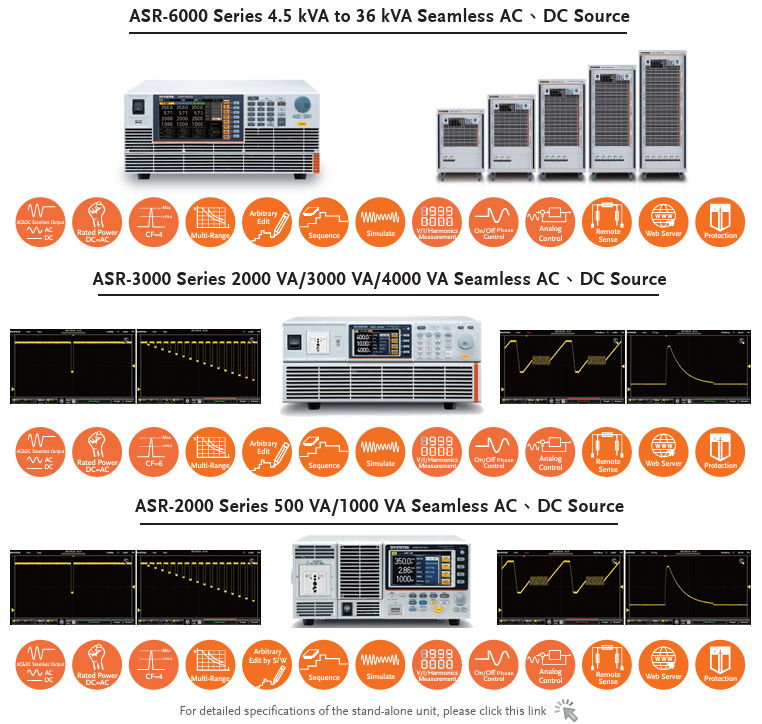
ASR-6000 Series 4.5 kVA to 36 kVA Seamless AC → DC Source

International AC Asr.png

Typical Test Items of ISO 16750-2 (Electrical Load)

graph

Automotive Wiring Harness Testing Solutions

In the automotive electronics industry, strict Automotive wire harness testing is the critical process of verifying the electrical integrity, connectivity, and safety of the wiring systems (low and high voltage) in vehicles. The below tests are conducted as apart of wire harness testing in automobiles

  • Durability Testing
  • Water Resistance Testing
  • Chemical Corrosion Resistance Testing
  • Temperature Tolerance Testing
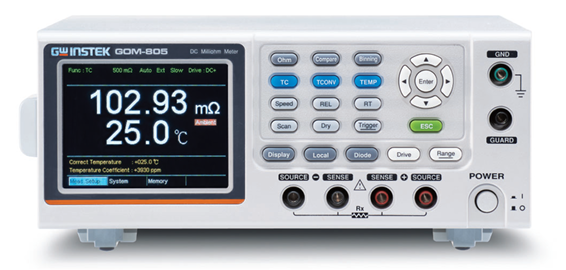
GOM 805 -Precision Milliohm Meter
  • 1µΩ resolution in 50m Ω range
  • High Accuracy – 0.05%
  • Pulse Mode –minimalize the measurement error form thermal EMF
  • Dry circuit mode
  • Fast measurement of 60 readings per second
  • 50,000 counts
  • Delayed measurement


gom

Automotive Electronics Burn in & Aging Tests
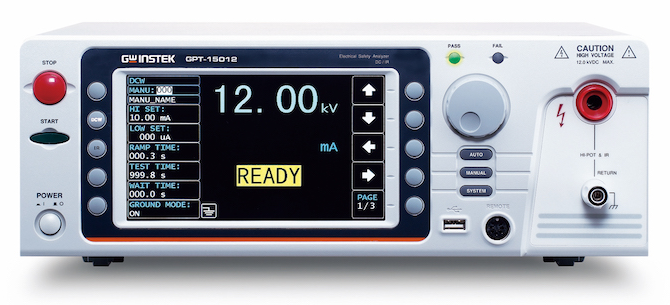
  • Safety testers in automotive electronics are crucial for validating the reliability and safety of components during manufacturing, R&D, and maintenance. They ensure compliance with standards by testing for insulation resistance , DC withstand voltage, ground bond and ground continuity in components like batteries, sensors, and ADAS systems.
  • Due to the high voltage output characteristics of GPT-15012, it is particularly suitable for the safety testing requirements of various high-voltage insulation components like energy storage devices, high-voltage relays, wires and cables etc.
GPT10000 Series Safety Testers

Test Functions : DC withstand /AC withstand/Insulation Resistance /Ground Bond/ground Continuity

GP-12004 : Can test Ground bond and ground continuity along with AC/DC withstand voltages and Insulation Resistance tests
GPT-15012: safety analyzer comply’ s with IEC 61010-2-034

GPT


Features

  • DC Voltage Max : 12kV
  • Insulation Resistance : 5kV
  • Comply with IEC 61010-2-034
  • Capacitive Load Testing Capability up to 47μF

  • Sweep Function for DUT Characteristic Analysis
  • Convenience Listed AUTO mode easy to read result & judge
  • Interface : RS-232C, USB host/device, Signal I/O and option GPIB or LAN

Multi Channel DC Power Supplies
PSW Multi Series Programmable Switching DC Power Supply

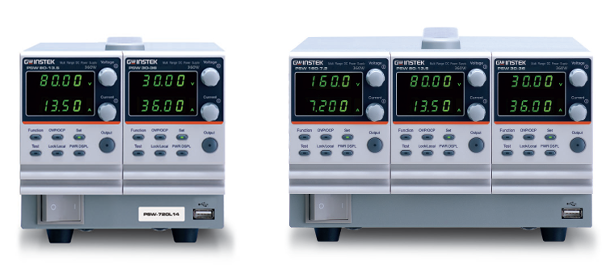
Multi channels: Two or Three channels Latency not exceed 0.1ms between channels Multi combination : 30V, 40V, 80V, 160V, 250V, 800V Power : 360W, 720W, 1080 W Advanced Web server function: SCPI command, Web control, Data Log, Edit sequence

Multi Channel

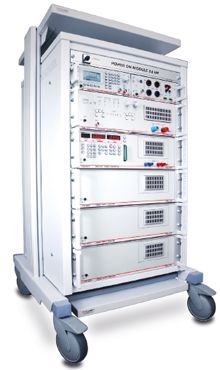
Toellner General Configuration for Automotive Transient Testing

Download Download Brochure
Toellner Logo

  • 4-Quadrant Amplifier to simulate automotive transients TOE-7621-32
  • Wavecontrol PC Software for controlling timing and sequence of waveforms TOE 9700
  • NI-DAQ Card TOE-9217
  • Micro-Switch for fast interruptions TOE-9261-50/100
  • DC Power Supply TOE-8870
  • Reference Resistors TOE-9260/100
  • Rack 19” HU including power on module and fixing material

Automotive Transient
Software WaveControl

Software Wavecontrol

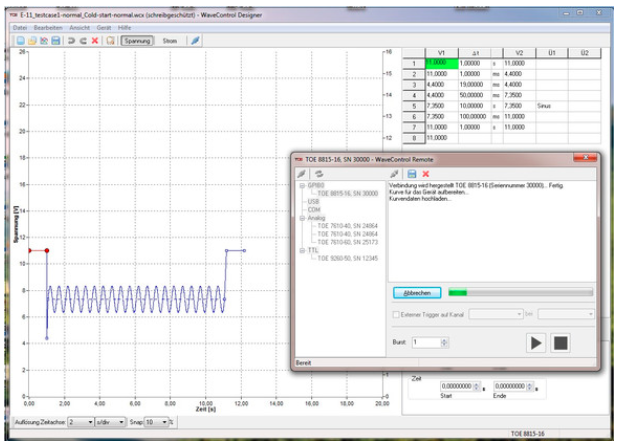
The Software Wavecontrol provides waveforms and controls the TOELLNER system components at the test station, which can be individually tailored to your requirements.

Using a DAQ-Card, any signal waveform can be provided with Arbitrary Power Supplies or 4-Quadrant Amplifiers with outputs from 160 W to 5200 W.

For fast interruptions, TOELLNER offers electronic switches with switching times below 500 ns.

The Software WaveControl provides extensive Waveform Libraries for Normative Tests, e. g.

- LV 124, LV 148
- VDA 320
- VW 80000
- VW 82148

- GMW 3172
- MBN 10615
- ISO 16750-2

  • Separate Voltage and Current Scale
  • SImport and Export of recorded Data
  • SVisual Generation of individual Waveforms
  • SSequence Controlling and Timing
Art Logics Automotive Battery and BMS Testing Solutions

Art Logics Logo

Modern vehicles contain 70–150 ECUs (Electronic control units, multiple communication networks (CAN, CAN-FD, LIN, Automotive Ethernet), high-voltage battery systems, and increasingly complex safety architectures . ART Logics designs and develops modular test and simulation equipments, meant for the automotive requirements, particularly in ECU validation, EV battery systems, and end-of-line (EOL) production testing.

High-Speed Signal Logging for ECU Development & Validation
Art Logics Smart Logger Series

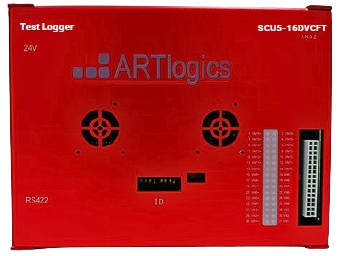
ART Logics Smart Loggers are engineered for automotive ECU signal acquisition and bus analysis during development (DV), production validation (PV), and vehicle-level testing.

Automotive Relevant Technical Features
  • Sampling rates up to multi-MHz range (100 kHz–10 MHz)
  • Isolated inputs

Enables capture of:

  • Speed Sensors output monitoring
  • BMS cells inputs / Battery pack cells monitoring
  • Injector drive signals
  • PWM motor control waveforms (EPS, pumps, fans)
  • DC-DC converter switching ripple
  • Gate drive signals in power electronics
Smart Logger

Synchronous multi-domain acquisition

  • Analog voltages (±10 V / ±20 V / ±40 V)
  • Current measurement (shunt-based or sensor-based)
  • Frequency & PWM inputs
Battery Cell Simulation for EV & Hybrid Vehicles

As EV architectures expand, BMS validation becomes critical. ART Logics provides multi-channel cell simulators designed specifically for automotive battery management systems.


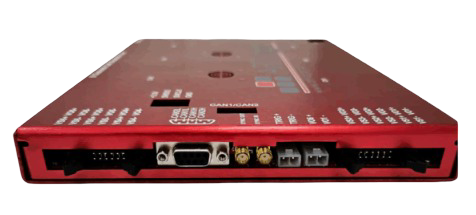
Battery Cell Simulators (6-Channel / 18-Channel)

Automotive-Specific Features:

  • Per-cell voltage simulation (0–7 V range)
  • High precision (< millivolt-level accuracy)
  • Current source >5A
  • Independent channel isolation >1500V
  • Active and Passive balancing function validation
  • Rise time for all channels <1ms
  • NTC temperature sensor simulation 0-8MOhm with 1 Ohm steps
  • Fault injection capability (Short / Open circuit, Reverse voltage)

These systems are used to validate:

  • Cell balancing algorithms
  • State-of-charge (SoC) estimation
  • State-of-health (SoH)
  • Overcurrent & thermal protection
  • HVIL (High Voltage Interlock Loop)
Battery Cell Simulators

Because the channels are isolated, engineers can simulate:

  • Module-level battery packs Cell drift scenarios
  • Rapid transient conditions without physical batteries
  • Significantly reduces risk during early BMS software validation
BMS Function for Test Benches Automotive Qualification

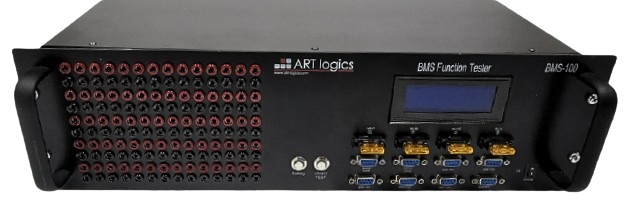
ART Logics provides integrated BMS function test systems combining Analog sensor simulation, High-voltage measurement interfaces , CAN/CAN-FD communication, PWM control, Embedded automation

BMS Function

These test benches are used during:

  • Design Verification (DV)
  • Product Validation (PV)
  • Lifetime Testing (LTT)
  • Production End-of-Line

Key Automotive Use Cases:

  • Insulation monitoring validation
  • Pre-charge circuit testing
  • Contactor control verification
  • Pack fault diagnostics
  • Compliance verification against OEM test specifications

Features:

  • The Standard BMS Loadbox can drive BMS run as test cases.
  • It simulate the specific signals for BMS.
  • There are sufficient resources to monitor and measure specific BMS signals.
  • There are CAN and LIN to communicate with BMS to diagnostic as specific test cases. It can support CAN FD as well.
  • The Standard BMS Loadbox controlled by LAN.
Battery Cyclers for Cell /Battery Pack Characterization & Endurance Testing

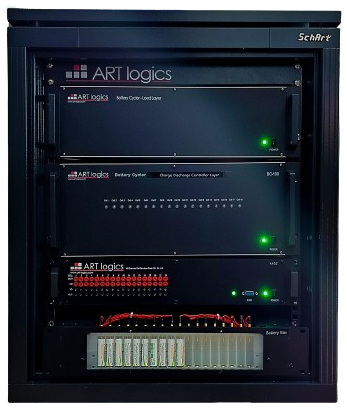
Battery cyclers are used in Cell characterization, Charge/discharge profile validation, Aging and lifetime testing, Thermal stress testing

Operating Modes:

  • Constant Current (CC)
  • Constant Voltage (CV)
  • Constant Power (CP)
  • Constant Resistance (CR)

These systems allow engineers to simulate:

  • WLTP load cycles
  • Dynamic driving current profiles
  • Fast charge scenarios
Battery cyclers
Advanced Electrical Testing Solutions for Low- and High-Voltage Automotive Components

Bolab Logo
Comprehensive Compliance Testing for Automotive Standards like LV 123, LV 124, ISO 16750, ISO 7637, VW 80300...

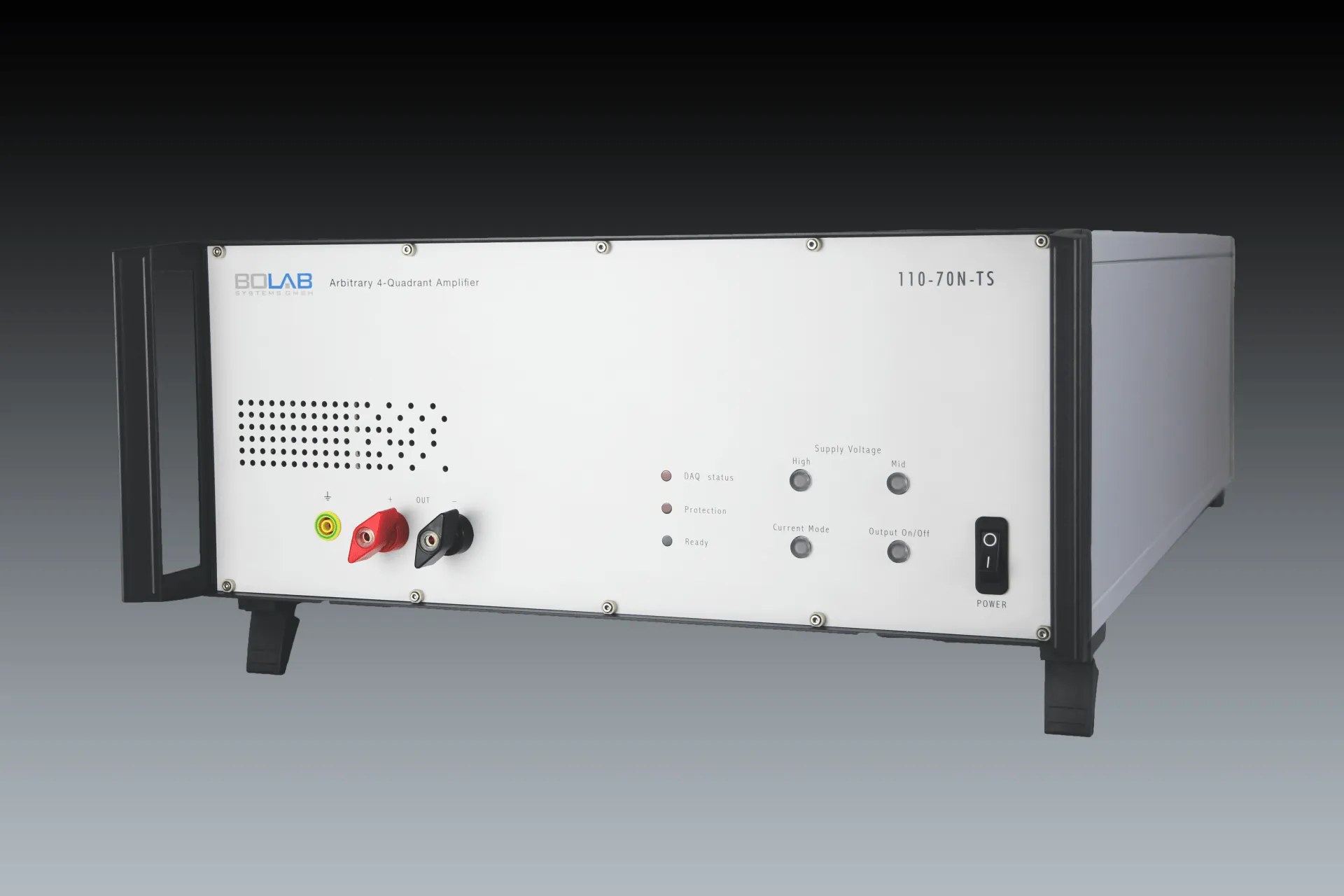
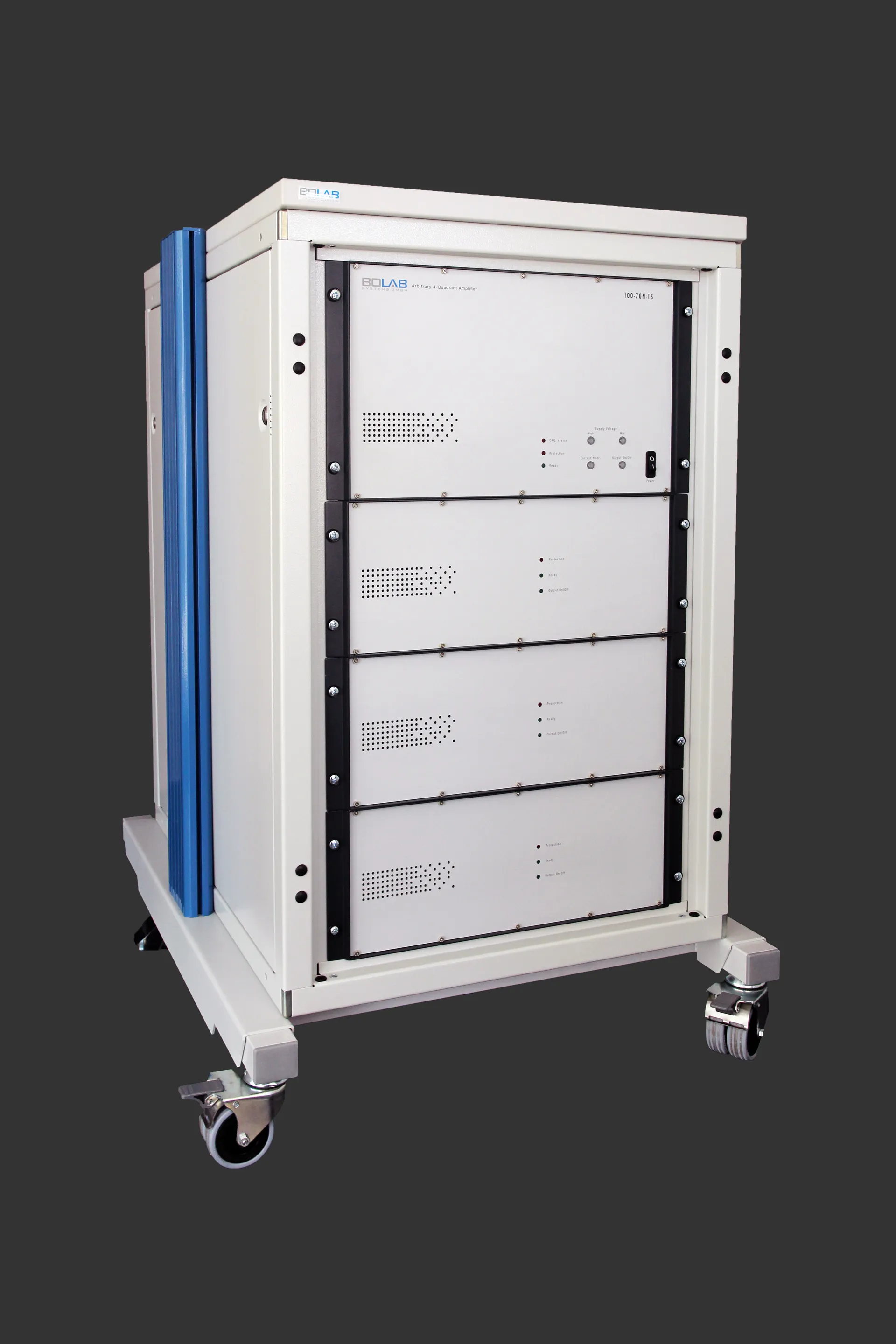
BOLAB Systems provides advanced testing solutions primarily for automotive electrical components, focusing on low-voltage (12V, 24V, 48V) and high-voltage (EV/Hybrid) systems. Their primary advantage lies in ensuring that vehicle components—such as batteries, inverters, and DC/DC converters—can reliably withstand electrical disturbances and comply with strict international standards like ISO 21498, LV 123, and VW 80300. 

BOLAB SOLUTIONS FOR AUTOMOTIVE TESTING
4-Quadrant Voltage amplifiers
Voltage/Current Stress Tests
  • Voltage Source Tests – applying constant or swept DC voltage
  • Current Source Tests – applying defined current profiles
  • Voltage Sink / Absorption Tests – DUT injecting current into the amplifier

Dynamic / Transient Tests:

  • Dynamic Waveform Tests – playback of recorded vehicle voltage/current profiles
  • Transient Pulse Generation – short voltage/current spikes
  • Ripple / AC Superimposition – adding AC noise to DC
  • DC - 200 kHz bandwidth DC
  • MHz (small signal -3 dB)
  • Output voltage ±75 Vpk
  • Rise / fall time 100 V/µs
  • Power ranges from 500W to 12kW
Smart Logger
  • USB interface standard, LAN optional
  • Analog control input 0 ... ±10 V for control of voltage and current
  • Monitor outputs for measured voltage and current values (not all models)
  • Modularly extensible via master-slave mode
  • Parallel and Series Connections for two or more units

Regenerative / Bidirectional Tests

  • Bidirectional Power Tests – amplifier can both source and sink power
  • Custom Regenerative Tests – DUT returns power to supply
LOW VOLTAGE TEST SYSTEMS

BOLAB's High-Performance Low Voltage Test Systems

BOLAB's low-voltage test systems are designed to meet the specific testing requirements of 12V, 24V, and 48V electrical systems in various applications, ensuring compliance with the VW 80000, LV 124, ISO 16750, ISO 7637 and other standards. These systems offer unmatched flexibility, precision, and reliability, making them the ideal choice for testing electronic components and ensuring their performance and safety. Equipped with advanced features and capabilities, BOLAB's low-voltage test systems empower users to effortlessly conduct a wide range of tests. Automotive professionals worldwide trust BOLAB's low-voltage test systems for their superior performance and quality.

Battery Cell Simulators

Typical low voltage tests that can be done for LV124 standard are

  • E-05 Load Dump Test
  • E-04 Jump Start Test
  • E -15 Reverse Polarity Test
  • E -10 Short Interruption Test
  • E-11 Start Pulse Test
  • E-06 Superimposed Alternating Voltage (Ripple) Test
  • E-07 Slow Voltage Ramp Test
  • E-02 Transient Overvoltage Test
  • E-03 Transient Undervoltage Test
  • E-09 Reset Behaviour Test
HIGH VOLTAGE TEST SYTEMS
High-Voltage Testing According to VW 80300 and LV 123 Including waveform libraries for LV123 | VW 80300 | VW 80303 | PSA | ISO 21498 | MBN LV 123 | ISO 7637-4 etc

BOLAB's systems are distinguished by their modularity, allowing you to start with a "small" 1 kW (1,000 V, 15 A) system and expand it module by module based on your application requirements and budget.

Never before has it been so simple to engage in high voltage testing for electric vehicles and gradually build up to a highly powerful solution. BOLAB empowers you to scale your testing capabilities at your own pace, ensuring a seamless and efficient testing process.


LV123 (High-Voltage Electrical Tests)

  • E-101 – HV Overvoltage
  • E-102 – HV Undervoltage
  • E-103 – HV Voltage Ramp
  • E-104 – HV Power Cycling
  • E-105 – HV Reverse Polarity
  • E-106 – HV Short Circuit
  • E-107 – HV Interlock (HVIL) Test
  • E-108 – HV Pre-charge / Discharge Test
  • E-109 – HV Isolation Monitoring
  • E-110 – HV Leakage Current Test

ISO 6469 / EV Safety Related Tests

  • Insulation Resistance Test
  • Dielectric Strength (Hi-Pot) Test
  • Isolation Resistance Monitoring Test
  • Ground Fault Simulation Test

Typical HV Functional Bench Tests

  • HV Contactor Switching Test
  • HV Load Simulation Test
  • HV Power Supply Stability Test

Key Advantages of Bolab solutions for Automotive Components Testing

  • Advanced Ripple Testing: Bolab’s unique series amplifier integration allows for precise ripple control across wide frequency ranges (10 Hz to over 300 kHz). This is critical for testing how HV batteries and inverters handle high-frequency disturbances from power electronics.
  • Modular and Scalable Design: Systems can start small (e.g., 1 kW) and expand module-by-module up to 54 kW or more, allowing manufacturers to scale their testing capabilities alongside their budget and project needs.
  • Real-World Simulation: Using AN-Series Artificial Networks, the systems replicate the actual impedance of a vehicle's power net. This enables "closer to real-world" testing of a component's robustness against internally generated noise like spikes and ripples.
  • All-in-One Testing Capability: OLAB provides a comprehensive, all-in-one Test system solution for testing needs. With features like Arbitrary Function Generator, Voltage Amplifier, Current Amplifier, Voltage Measurement, Data Acquisition, Current Measurement, and Electronic Load (Current Sink), provide everything which is needed in a single system streamlining the verification process.
  • Load Dump Capabilities: Unlike traditional coupling transformers, BOLAB’s 4-quadrant amplifiers can simulate sudden voltage spikes (load dumps), which are essential for meeting VW 80300 and LV 123 requirements.
  • User-Friendly Software: The WaveMaster Software allows engineers to create complex waveforms graphically or via tabular input without needing specialized software development knowledge.
  • Futureproofing: The hardware and software are designed to be easily upgradable, ensuring compatibility with evolving OEM standards and emerging global regulations for electric vehicles
Vision Engineering Automotive Inspection Solutions
Vision Enginnering Logo

Vision Engineering designs and manufactures ergonomic stereo microscopes, digital inspection cameras and non-contact 3D measurement systems used extensively across the automotive value chain — from PCB and ECU assembly to wiring harness manufacture, connector and terminal inspection, solder joint verification, weld seam analysis and dimensional inspection of machined and moulded components. Its eyepiece-less optical technology reduces operator fatigue on high-volume inspection and rework lines, while digital 3D inspection systems give quality teams repeatable, non-contact measurement without expensive CMM cycle time. The Vision Engineering Automotive inspection solutions include:

PCB & ECU Assembly Inspection

Automotive ECUs pack dense, fine-pitch PCB assemblies that must be visually verified at multiple stages — component placement, first-article inspection, in-process QC and failure analysis. Vision Engineering stereo microscopes give line operators and quality engineers a large, high-resolution stereo image without eyepieces, so they can compare boards, trace tracks and inspect components for long periods with far less fatigue than a conventional microscope.

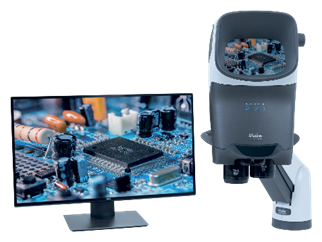
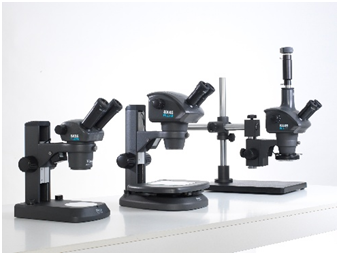
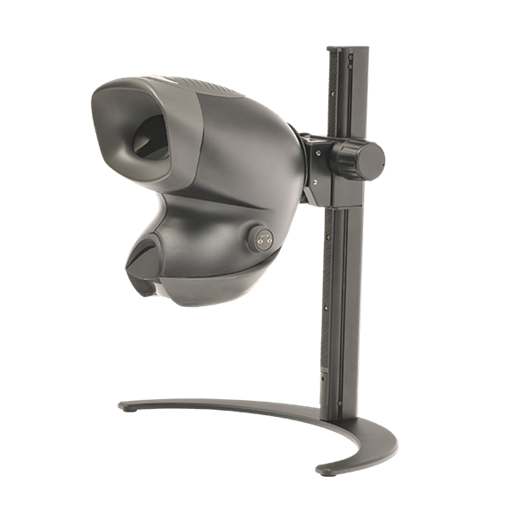
Vision Engineering-Mantis Ergonomic Stereo Microscope
Mantis Ergonomic Stereo Microscope
  • Up to 20x magnification, eyepiece-less design
  • Unique large, high quality optical stereo image for board-level inspection
  • Ergonomic viewing head lets operators sit back in a natural posture during long ECU inspection sessions
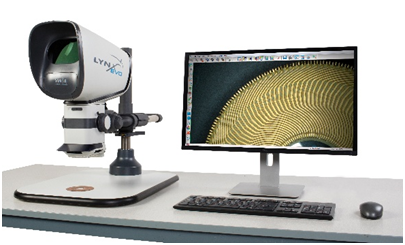
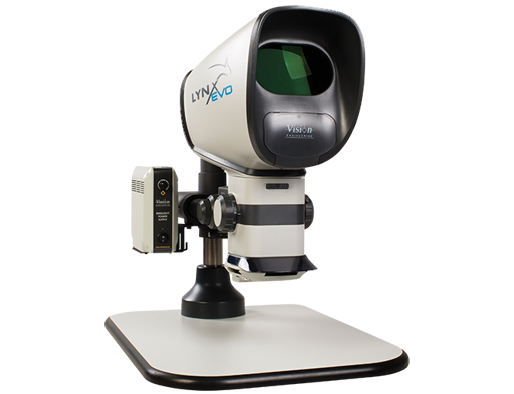
LYNX EVO Stereo Zoom Microscope
  • 6x–60x magnification for fine track and component inspection
  • LED lighting with substage illumination for backlit PCB and connector inspection
  • Multi-axis and Ergo stand options to suit ECU assembly and rework benches
-LYNX EVO
LYNX EVO Stereo Zoom Microscope
SX Range Stereo Microscope
  • 4x–200x magnification, Greenough design with excellent optical clarity
  • Range of stand configurations for fixed inspection or line-side stations
  • Cost-effective general-purpose option for incoming component and PCB checks
Solder Joint, SMD & BGA Inspection

Reliable solder joints are critical for automotive electronics that must survive years of vibration, thermal cycling and under-bonnet conditions. Vision Engineering's digital microscopes capture high resolution, well-lit images of solder fillets, SMD placement and BGA edges, and let inspectors record and share images directly for traceability and rework documentation.

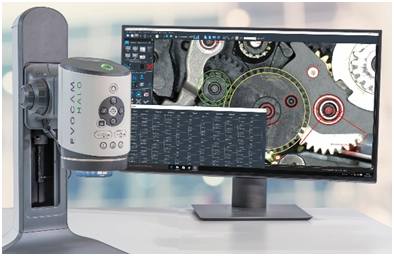
EVO CAM HALO
  • 4K Ultra HD, 30fps digital inspection camera
  • Auto lens ID and wide dynamic range for solder joint and component colour/contrast inspection
  • Image capture with time-stamped reporting for traceable quality records
Vision Engineering-EVO CAM HALO
Vision Engineering-EVOCAM ICON
EVOCAM ICON
  • Full HD camera with HDMI, USB3 and USB2 (stand-alone) connectivity, WiFi optional
  • Suited to standalone or PC-linked inspection stations on the SMT line
  • Image capture and time stamping for solder joint quality reporting
Wiring Harness, Connector & Terminal Inspection

Automotive wiring harnesses carry hundreds of crimped terminals and connector cavities per vehicle, and a single mis-formed crimp or bent pin can cause a field failure. Ergonomic stereo microscopes and eyepiece-less viewers let harness and connector inspectors work comfortably through full shifts while checking crimp form, wire strand capture, pin alignment and cavity sealing.

OPTA
  • Eyepiece-less viewer with perfect depth perception for crimp and terminal inspection
  • 4x and 6x magnifications suited to fast, repetitive harness-line checks
Vision Engineering-OPTA
Vision Engineering-LYNX EVO Harness Inspection
LYNX EVO
  • Substage illumination for backlit inspection of connector cavities and terminal seating
  • Ergo stand configurations for harness and connector assembly stations
3D Dimensional & Weld Seam Inspection

Machined and moulded automotive parts, weld seams, gears, connector housings and sensor bodies often need non-contact 3D measurement and surface inspection without the cycle time of a full CMM run. Vision Engineering's digital 3D inspection microscopes give true stereo depth perception on screen, letting engineers evaluate weld penetration, surface defects, burrs and part geometry, and capture 3D images for reports without special glasses.


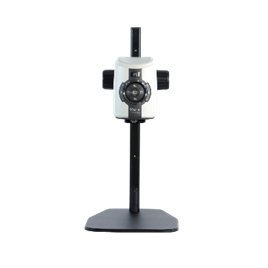
ProteQ VISO – Digital 3D Inspection Microscope
  • X0.45 to X2.0 magnification for larger automotive components and assemblies
  • 18° display tilt and 360° oblique and direct viewer for weld seam and surface defect inspection
  • Non-contact 3D viewing for dimensional checks on machined and cast parts
Vision Engineering-ProteQ VISO
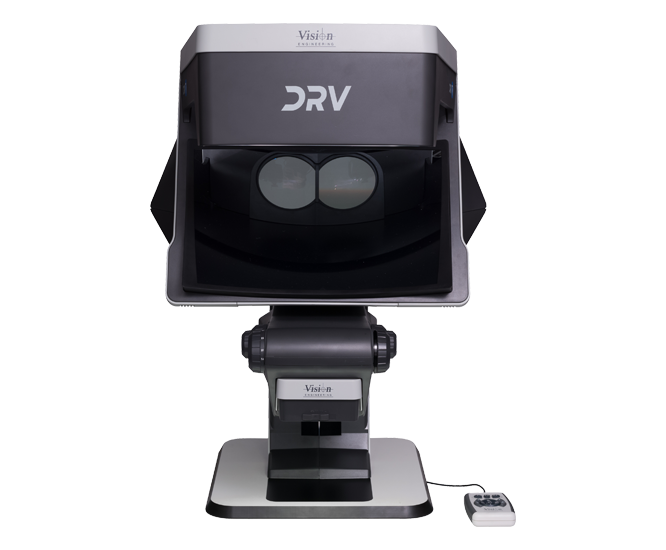
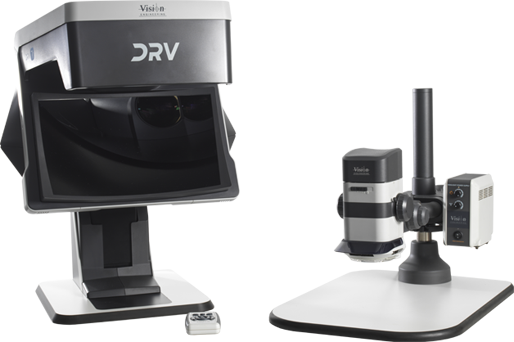
Vision Engineering-DRV-Z1

DRV-Z1
  • 6x–186x magnification with true 3D view, capture and share
  • 3D imaging without special glasses, ideal for connector pin alignment and small-part QC

DRV STEREO CAM
  • 8.4x–700x magnification range covering fine BGA/SMD detail up to broader assembly views
  • 3D view, capture and share for weld seam, gear tooth and sensor housing inspection
Vision Engineering-DRV Stereo Cam
Bench Assembly, Crimping & Rework Stations

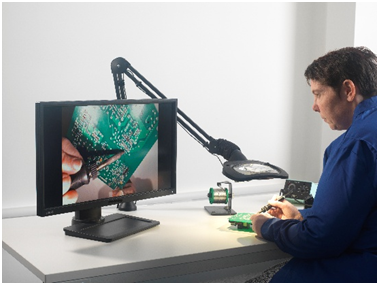
For general assembly, crimping, rework and final QC benches across harness, connector and ECU lines, Vision Engineering's industrial bench magnifiers give shadow-free, glare-free illuminated viewing so operators can work accurately at close range for extended periods.

Vision Engineering-Bench Magnifiers Automotive

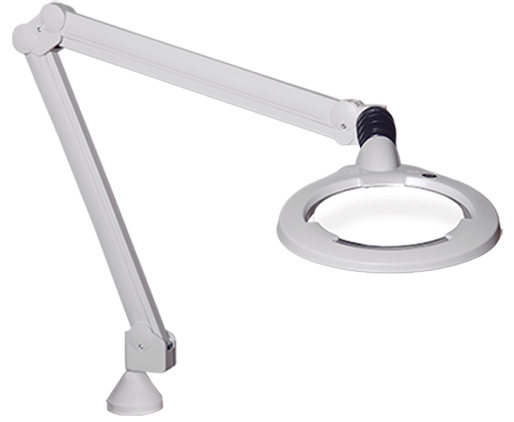
Wave LED / Circus LED / KFM LED / LFM LED G2
  • 1.75x–4.75x magnification with dimmable LED illumination
  • Edge clamp, K-arm and steel-arm mounting options to fit harness and assembly benches
  • Full-circle, flicker-free illumination for virtually shadow-free crimp and terminal viewing

BenchKam
  • Exclusive to Vision Engineering — easy image capture directly from the bench magnifier
  • Maintains the 3D view available through the magnifier, useful for rework documentation and traceability
Vision Engineering-BenchKam

JBC Automotive Soldering & Rework Solutions
jbc Logo

JBC, with over 95 years of experience, is a global leader in soldering and rework tools for the electronics industry, trusted across automotive ECU, ADAS, sensor and EV/BMS electronics manufacturing. Its Intelligent Heat Management technology delivers fast temperature recovery and instant heating when a tool is lifted from its stand, extending tip life by up to 5x and lowering energy consumption — critical for high-volume automotive PCB assembly, harness terminal soldering and line-side rework where uptime and consistent joint quality matter. The JBC Automotive soldering and rework solutions include:

Precision Soldering for Automotive ECUs & Sensor Modules

Automotive ECUs, ADAS controllers and sensor modules pack dense, fine-pitch components that demand precise, repeatable soldering with minimal thermal stress on the board. JBC's Nano and Compact stations, powered by Intelligent Heat Management, deliver fast, stable temperatures for reliable joints without damaging sensitive automotive-grade components.

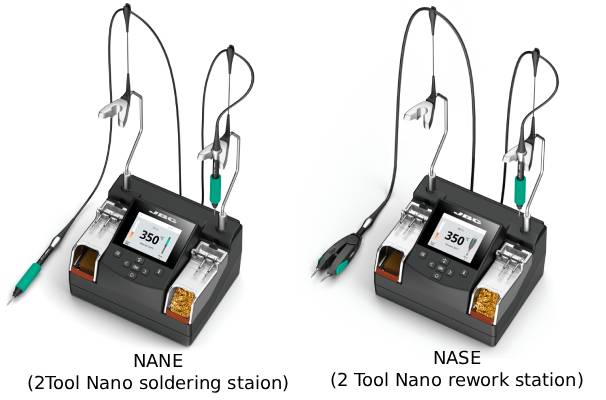
NANE Station 2-Tool Nano Soldering
Nano Stations
  • Designed for soldering and rework of the smallest SMD components (down to 01005/0201/0402)
  • Extremely light, ergonomic tools for high-precision work on ECU and sensor PCBs
  • Fast heat-up and tip recovery to keep production throughput high

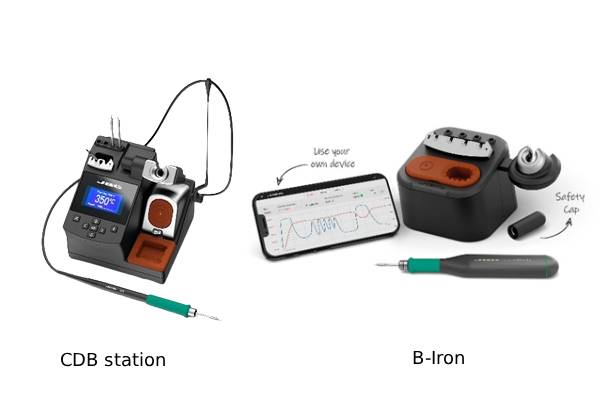
Compact & B-IRON Stations
  • General-purpose soldering stations for automotive PCB assembly and bench rework
  • B-IRON offers Bluetooth connectivity and cordless operation for flexible line-side use
  • Sleep & Hibernation modes reduce oxidation and extend tip life during pauses on the line
Compact & B-IRON Stations
SMD & Hot Air Stations
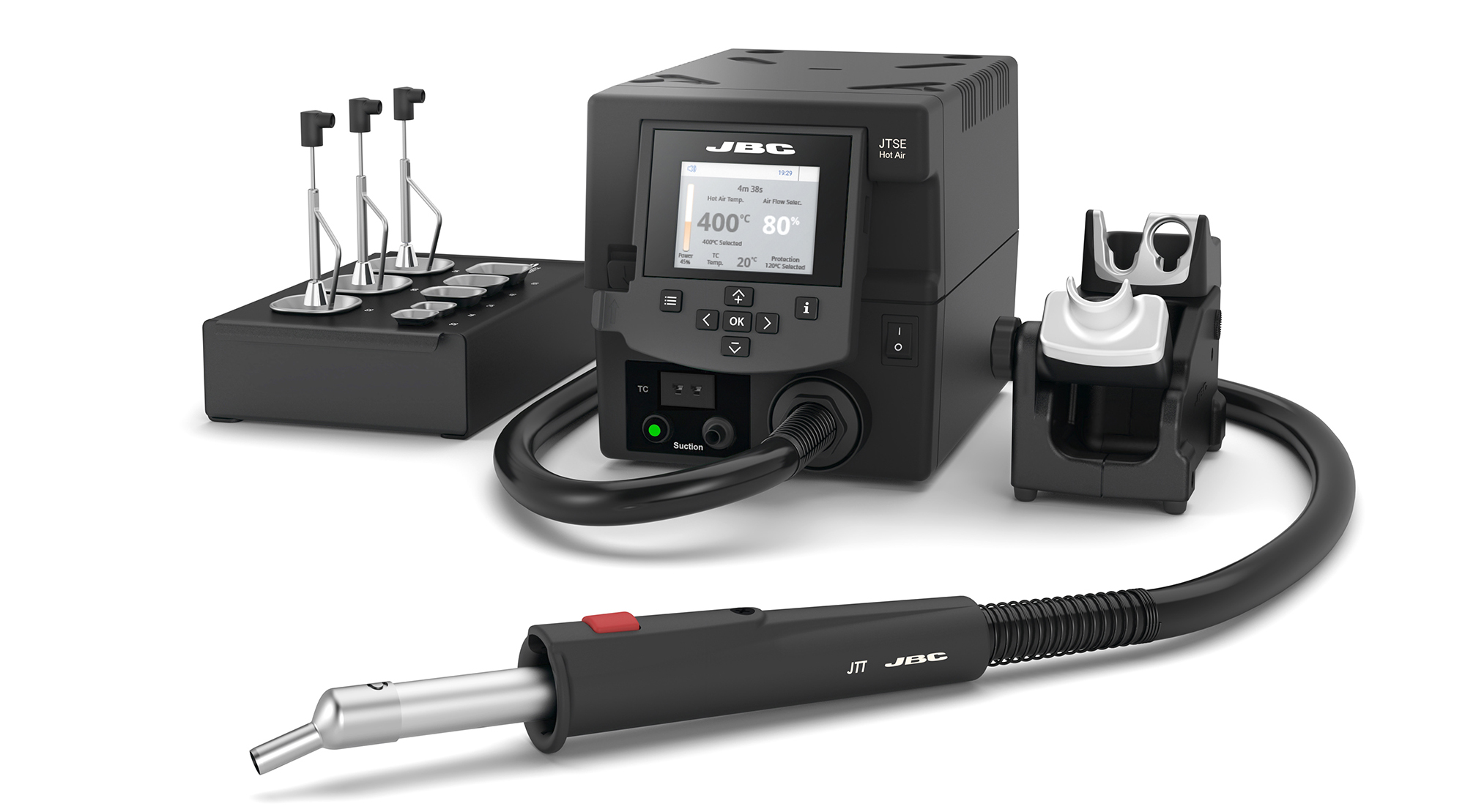
JTSE Hot air station

Automotive electronics increasingly use BGA, QFP and other fine-pitch packages for ADAS, infotainment and body-control modules. JBC hot air and multi-tool rework stations give contactless, evenly-distributed heat with precise temperature and airflow control, protecting nearby components during BGA/SMD removal and reflow.

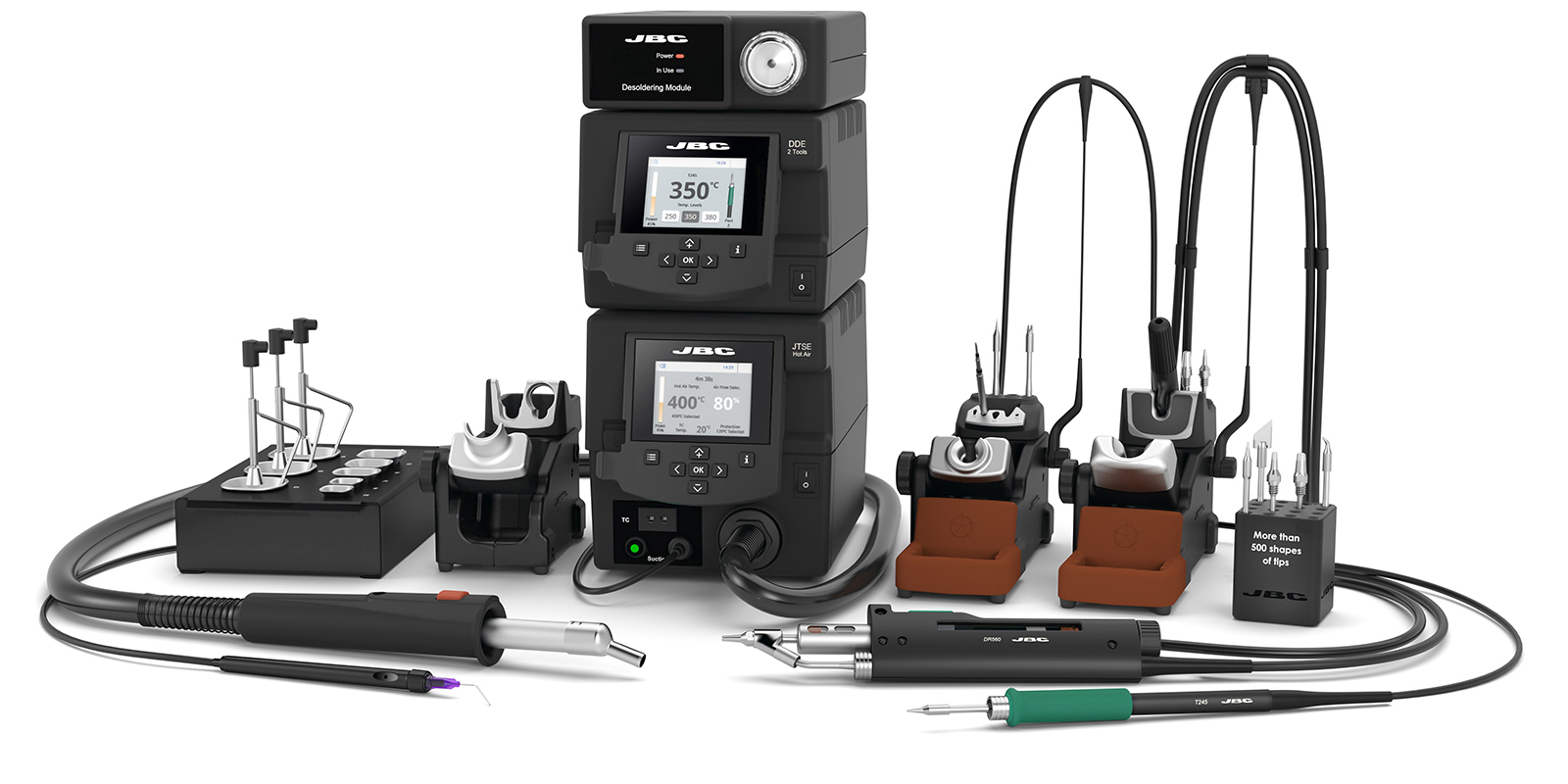
RMSD RMSE Rework System Automotive
RMSD / RMSE Complete Rework Systems
  • Combines a 2-tool DDE control unit, soldering iron, hot air station and electric vacuum desoldering module in one system
  • Compatible with up to 10–13 different JBC tools for a fully personalised automotive rework bench
  • Up to 85% vacuum for precise, efficient solder removal on multi-layer automotive PCBs

Hot Air Stations
  • Fast, even heating with precise temperature and airflow control for BGA/QFP rework
  • Contactless desoldering minimises thermal risk to neighbouring automotive-grade components
Hot Air Stations
Heavy Duty Soldering for Wiring Harness & Connector Terminals

High-current automotive connectors, busbars and wiring harness terminations often need large amounts of heat to form a reliable joint without long dwell times. JBC's Heavy Duty range delivers the power needed for these high-thermal-mass joints while keeping tip life and process control consistent.

Heavy Duty Soldering


Heavy Duty (HD) Stations
  • The most powerful JBC soldering stations, built for applications requiring large amounts of heat
  • JBC Exclusive Heating System with Sleep & Hibernation Modes to extend tip life on high-duty-cycle lines
  • Suited to busbar, connector terminal and heavy-gauge harness soldering in EV and powertrain assembly
Desoldering & Through-Hole Component Removal

Automotive power modules, connectors and relays are frequently through-hole mounted for mechanical strength. JBC desoldering irons and modules quickly and safely clear plated through-holes for component replacement and rework without damaging the PCB pads or surrounding automotive-grade components.

JBC-Desoldering Through-Hole Automotive


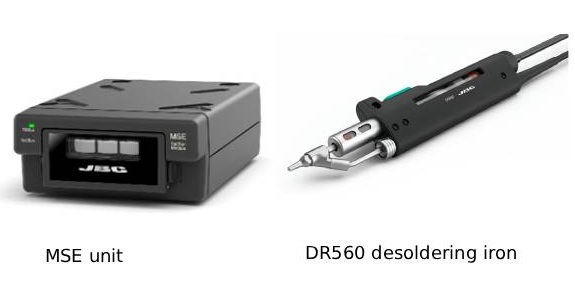
DR560 Desoldering Iron / MSE Electric Desoldering Module
  • Used for desoldering through-hole components and clearing excess solder after rework
  • Powerful vacuum suction for clean, damage-free hole clearing on multi-layer automotive PCBs
Automated & Robotic Soldering for Production Lines

High-volume automotive electronics manufacturing benefits from automated soldering to remove operator variability and increase throughput on repetitive joints such as connector pins, wire-to-board terminations and sensor leads.

JBC Automation & Robots
  • Automated soldering integration for consistent, repeatable joint quality on high-volume lines
  • Reduces cycle time and operator-dependent variation on repetitive automotive assembly tasks
  • Pairs with JBC's Auto-Feeder for continuous wire-solder feed on automated stations
Auto-Feeder
Automatic-Feed Soldering Iron
  • Automatic solder wire feed for consistent solder amount across repetitive automotive joints
  • Improves line speed and reduces operator fatigue on high-volume soldering stations
JBC-Desoldering Through-Hole Automotive
Preheaters, PCB Support & Fume Extraction
Larger automotive PCBAs and panels are prone to thermal shock and warping during rework. JBC preheaters bring the whole board to a stable base temperature before localised rework, while PCB support and fume extraction protect both the board and the operator on the rework bench.
JBC-Preheaters Automotive PCB
Preheaters & Rework Benches

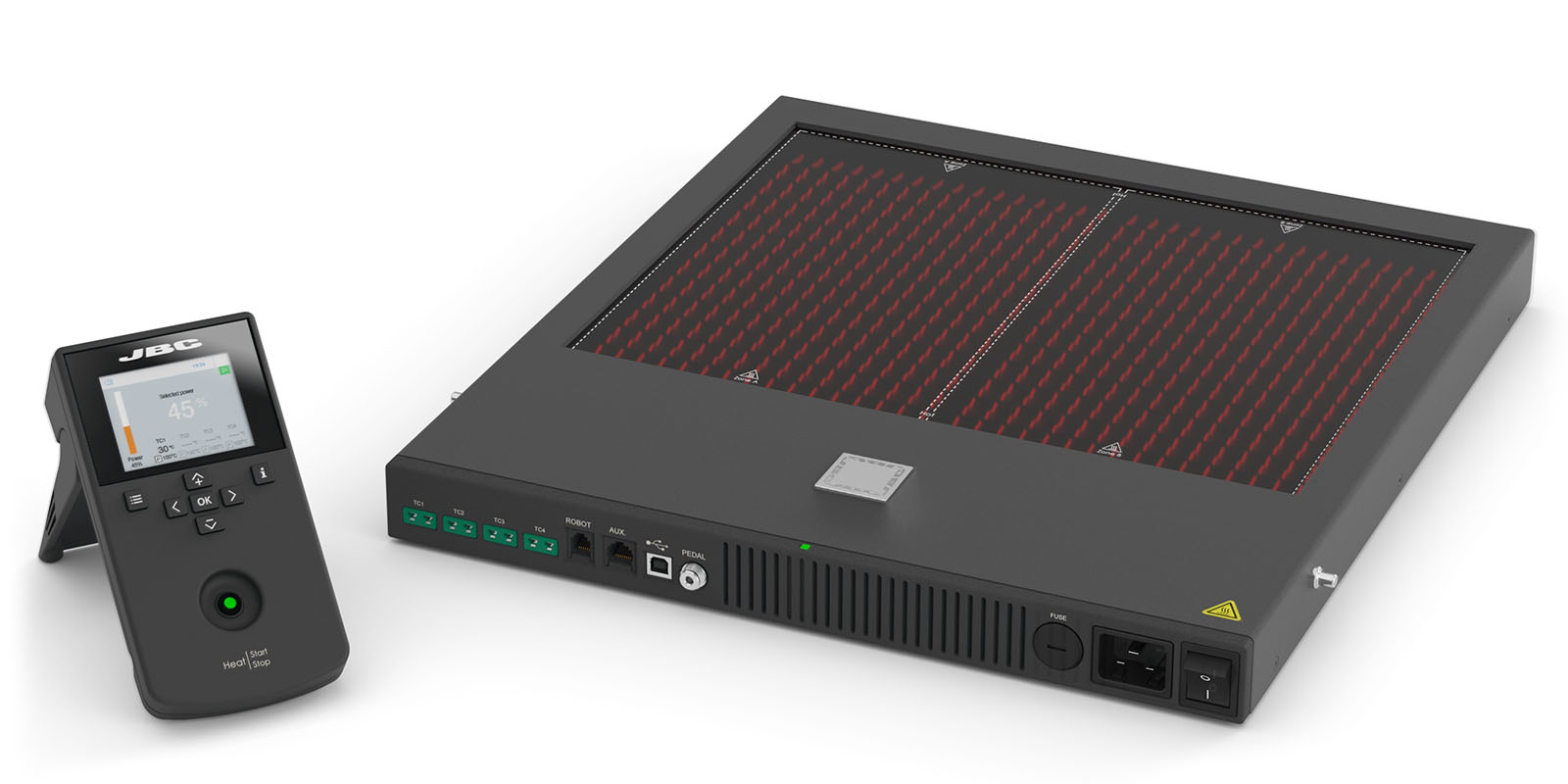
PHBE Preheater

  • Avoids thermal shock on multilayer automotive PCBs during rework
  • Combined preheater and PCB support solution for medium/large PCBAs and panels
Fume Extractors
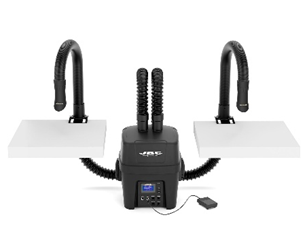
FAE1 KIT2

Fume Extractor Kit for 2 Workbenches
  • Captures solder fumes at source on automotive assembly and rework benches
  • Protects operator health and supports ESD/EC-compliant, safe working environments
JBC-Fume Extractors Automotive
Tools & Stands / Cartridges & Tips
  • Wide range of tip shapes suited to virtually any automotive soldering, desoldering or rework application
  • Intelligent stands auto cut-off power when tools are placed down, extending tip life on busy production lines